



What is Our Goal
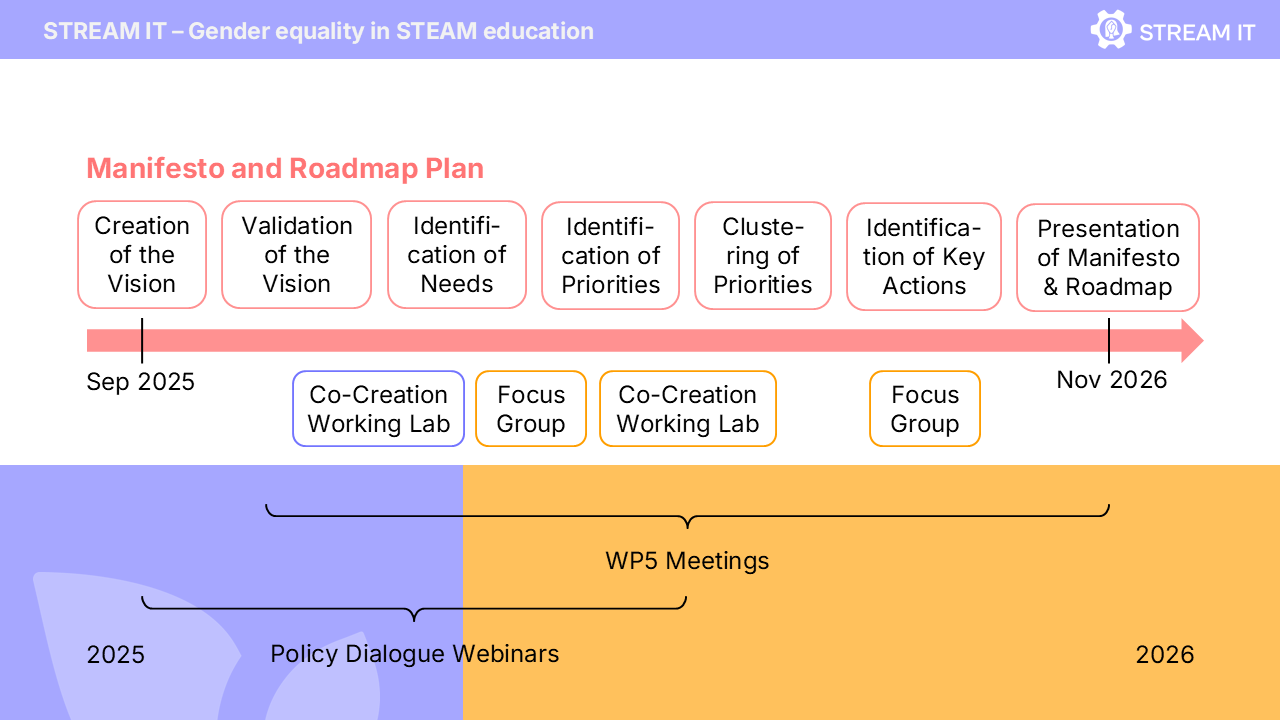
The STREAM IT project is driven by a bold mission: to foster more diversity, spark greater innovation, and create a fairer future in science and business. But how do we turn this vision into reality? Our answer is twofold: the development of a European Manifesto for gender-inclusive STE(A)M (Science, Technology, Engineering, Arts, Mathematics) education and careers, and a comprehensive roadmap to implement it. These efforts are grounded in broad stakeholder engagement, including policy dialogue webinars and in-person workshops, ensuring that the voices of all partners and stakeholders shape the path forward.
In this blog post, we explore Steinbeis’ experiences within the project, key lessons learned, and the value of cross-sector collaboration in fostering innovation with societal impact.
The Manifesto and Roadmap: Vision and Action
Policy Dialogue Webinars: Co-Creating the Roadmap
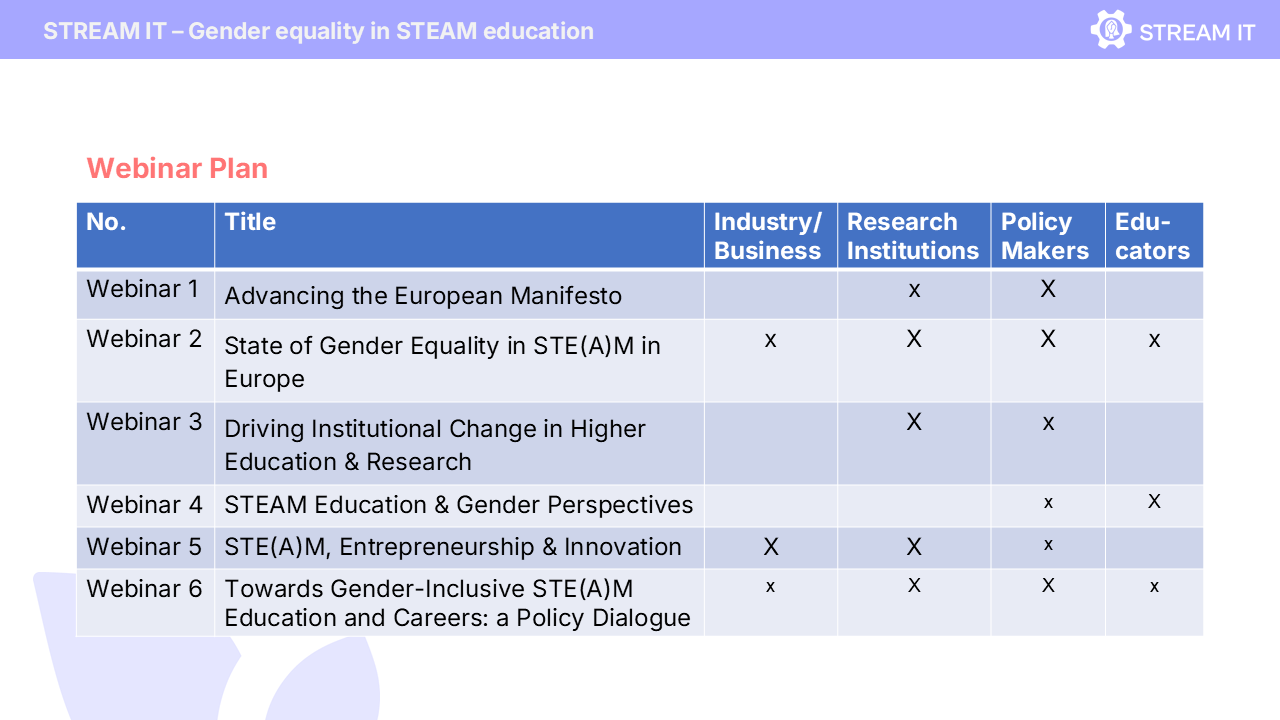
Webinar Highlights
- Webinar 1: Explored existing roadmaps in STEAM-related projects, identifying transferable principles and activities.
- Webinar 2: Presented data-driven findings on gender equality in STEAM, drawing from research and EU-funded initiatives.
- Webinar 3: Focused on best practices for encouraging female students in higher education, with input from institutional leaders.
- Upcoming Webinars (2026): Will address gender gaps in education (including non-formal learning), female entrepreneurship, and will foster stakeholder engagement to refine recommendations.
Each session is designed not just to collect input, but to foster co-creation – ensuring that the roadmap is both visionary and grounded in real-world experience.
In-Person Workshops: Deepening Engagement
- Vision: Why do we need a roadmap?
- Framework: What should the roadmap look like?
- Plan: How should we implement the roadmap?
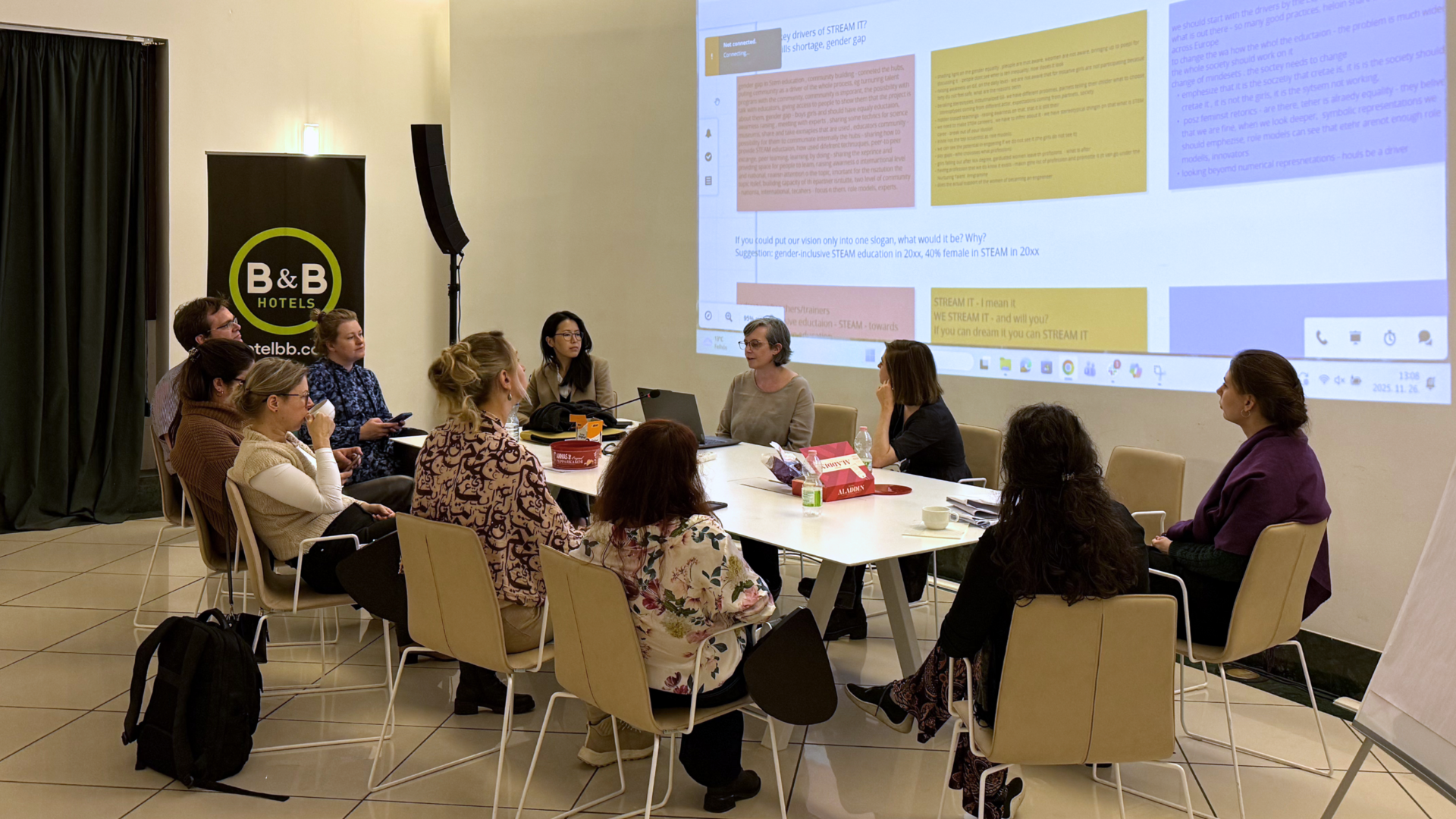
Shaping the Future Together
Authors

Steinbeis Europa Zentrum
Marta Escoto de Tejada is a chemical engineer with a master’s in environmental engineering. Currently, she manages EU projects at Steinbeis Europa Zentrum, focusing mainly on communication, dissemination, and project administration. As a woman in STEM, she brings valued perspective to STREAM IT, where she is involved in the policy dialogue supporting the advancement of gender equality within STEAM fields across Europe.

Steinbeis Europa Zentrum
Ina Qian studied mechanical engineering with a focus on product design. Since October 2024, she has been working at Steinbeis Europa Zentrum, where she combines her technical background with creativity to draw attention to innovative solutions in EU sustainability projects. She also supports efforts to managing the projects, sharing results with the right audiences, creating a roadmap for policy recommendations and to create long-term benefits.